The rescue of Radha from pirates
Just DesertsThe rescue of Radha from pirates is both a physical deliverance and the turning point through which Radha Bhimani’s fractured identity becomes connected to Sir David Pentland, Grenadine Reef, and the later ethic of refuge for abused women. It interrupts a chain of forced movements—kidnapping in Kutch, captivity at sea, and involuntary religious confinement—and replaces abandonment with deliberate care, even though the rescue itself does not erase the violence that preceded it.
Causes and Background
Radha was born in Kutch in western India. Her mother died in childbirth, and Radha was raised by her paternal grandmother and aunts while her father served as a minor district official. Fighting among the Mughals, the Marathas, and the British repeatedly displaced her family: because they were Hindu in a district conquered by the Muslim Mughals, they had to flee, and they returned when that power was defeated. The subsequent arrival of the British created another period of instability. Radha’s memories of the sequence were fragmented, but the pattern was clear: political conquest repeatedly turned home into a place from which her family might have to escape.
Her father remarried, yet Radha never lived with him and his new household, and she never met the siblings born from that union. When she was only a year older than Elizabeth Bennet was during their conversation, Radha was kidnapped for sale into slavery. She was rescued before the sale could occur, but this first deliverance did not return her to India. The rescuing ship was Spanish, carried several priests, and took her away from the coast of the Arabian Peninsula. Its passengers taught her rudimentary Spanish, but safety came with coercive conditions: after landing in Spain, Radha was forced into a nunnery and remained cloistered for six years outside Cadiz.
At twenty-one, Radha was selected for a mission to South America without being given any say in the decision. In the spring of 1772, she and twenty-nine other members of the order sailed from Cadiz toward Cartagena on the Spanish Main. Her movement across the sea therefore remained shaped by other people’s decisions. The voyage was not a voluntary journey toward a chosen future but another imperial and religious passage in which Radha’s body, labor, and destination were controlled by institutions around her.
The Pirate Capture and Naval Intervention
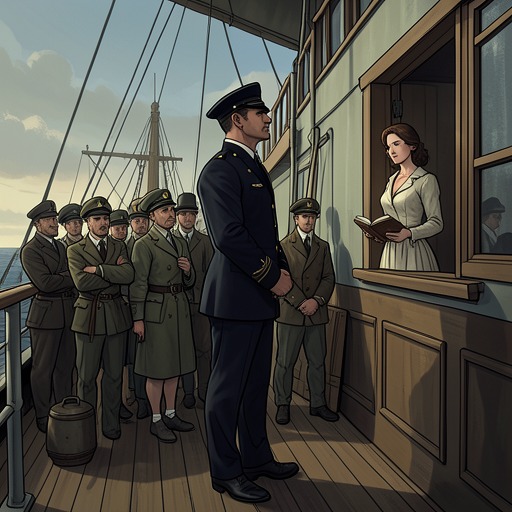
During the voyage, pirates captured the ship. The immediate value at stake was not merely freedom but survival: Radha and the other members of the order were placed in a situation she later described as extremely grim. The rescue came when Sir David Pentland and the crew of the appropriately named HMS Glory engaged the pirates. Their intervention freed the surviving captives and transformed the ship from a site of forced transport into the scene of a military deliverance.
The reversal was nevertheless brutal. During the battle, the pirate captain dragged Radha onto the deck and stabbed her with his sword. The blade passed through her womb, leaving her with a wound that was nearly always fatal. As she fell with severe pain in her torso, her last apparent sight was Sir David striking the pirate captain through the neck. The rescue thus contained both liberation and renewed bodily destruction: Radha was freed from the pirates at the very moment that their captain inflicted the injury expected to kill her.
Radha was given the last rites, and the other survivors of the order were landed under a white flag of neutrality so that they could continue onward. Radha, however, was too ill to be moved and was left behind. The group’s departure made her rescue incomplete. She had escaped enslavement and pirate captivity, but she was now an isolated, gravely wounded survivor separated from the order that had carried her across the Atlantic.
Survival Beyond the Rescue
Radha’s continued life became an act of resistance against the apparent finality of the wound. Despite stomach injuries being nearly uniformly fatal, she lingered and fought the infection. She nearly succumbed twice even after receiving personal care, but eventually overcame the last infection and recovered. The story presents survival not as an effortless miracle but as a prolonged struggle in which rescue creates the possibility of life while Radha’s own endurance completes it.
Sir David had a large house in Bridgetown on Barbados, and he took Radha into it when the survivors reached the island. His housekeeper and a nurse helped care for her, and Radha believed that without this sustained attention she would have died. The rescue therefore extended beyond the naval attack. HMS Glory removed her from immediate pirate control; the household in Barbados kept her alive through the long aftermath of stabbing, infection, and abandonment.
Her circumstances after recovery remained radically displaced. She was an Indian woman who spoke Spanish, a forced nun left behind by the rest of her order, and a survivor of four days of pirate depredations living in the home of a British naval hero in Barbados. This combination of identities links the event to the book’s wider history of migration, empire, religion, maritime violence, and social judgment. Radha’s rescue does not restore a single original identity. Instead, it begins the difficult formation of a life across several languages, continents, and imposed affiliations.
From Rescue to Marriage
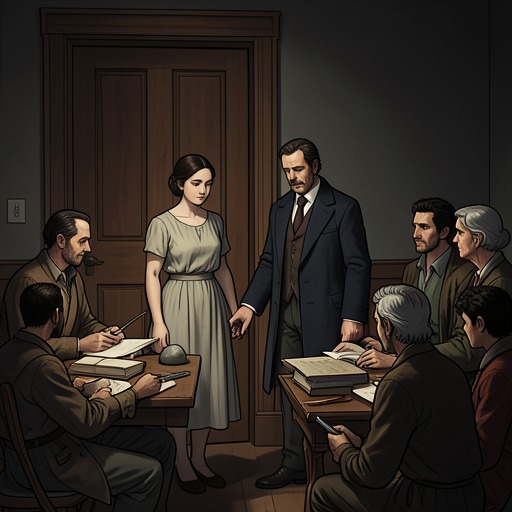
The rescue acquired a second meaning when Radha understood that she was alive partly because of Sir David’s personal decency. After eleven weeks had passed since the capture of the original ship, she moved for propriety into the home of a widow known to him, and Sir David began to court her. Radha disclosed what had happened during the four days before her rescue rather than allowing silence to conceal the violence imposed on her. Sir David took her hand and told her that it did not matter. His response did not undo the stabbing, captivity, or forced confinement, but it refused the judgment that those experiences had made her unworthy of affection or marriage.
The rescue also exposed the double standard surrounding Radha’s survival. Sir David had been knighted for naval service, while Radha, despite surviving nearly ten years of crimes and a wound that was almost always fatal, encountered barbed remarks from the moment her recovery seemed possible. Some people said that it would have been better if she had died. She was treated as though her survival were an embarrassment, and her supposed offense was merely having lived near the coast in India, where slavers could seize her. The naval action therefore saved her from immediate violence without protecting her from the social punishment directed at its victim.
Consequences for Sir David and Radha
The treatment of Radha became the final reason Sir David abandoned his naval career. He resigned his commission, and the couple returned to Britain. Radha willingly converted, though only superficially, to the Church of Scotland, and they married in Sir David’s home region outside Edinburgh. After their wedding journey they moved to London, where they learned of an estate they could purchase. The wealth that had accompanied Sir David’s reputation made that new life materially possible, but the decision to leave the navy also shows that the rescue changed the rescuer: he rejected a career whose surrounding society could celebrate his heroism while degrading the woman he had saved.
The couple eventually acquired Grenadine Reef and lived there for thirty-two years. Its name commemorated another episode in Sir David’s maritime history. In 1770, as the newly appointed captain of HMS Glory, he had been sent to the West Indies after a refit at Plymouth. The ship survived the edge of the first hurricane of the season, losing spars and suffering minor injuries among the crew, while a Spanish treasure galleon attempting to reach Havana ran aground on a reef near the Grenadine Islands. Nearly all of that ship’s crew died when it wrecked in the hurricane. Two days later, Sir David’s crew recovered a significant portion of the treasure before the remaining hull was destroyed and sank. The exploit brought Sir David his knighthood and provided the share of treasure used to purchase the estate, joining the rescue narrative to the imperial maritime economy that sustained Radha’s later household.
Radha’s Lasting Legacy
Radha’s experience became a practical source of moral instruction for Elizabeth Bennet. Elizabeth later placed Radha beside Madeline Gardiner as one of the two people from whom she had learned what it meant to be a gentle-born lady. Madeline was the wife of a London tradesman, the mother of four young children, and an active hostess supporting Edward Gardiner’s business. Radha was a shy woman born in India, kidnapped three times, subjected to horrific pirate violence, rendered unable to bear children by her injuries, and rarely present in society. Their lives could hardly have been more different, yet Elizabeth found that both taught closely related lessons about love and the everyday work of living responsibly.
Those lessons were expressed through estate management and care rather than ceremony. Elizabeth accompanied Jane Bennet on tenant visits from childhood, and the knowledge learned through Radha and through visits to tenants at Grenadine Reef made the later work at Longbourn more efficient and more attentive to tenants’ welfare. In this sense, the rescue’s consequences spread beyond Radha’s survival and marriage. The care that had once been directed toward a wounded, isolated woman became part of an ethic in which the master of an estate bore responsibility for the people dependent upon it.
The wider household continued to convert the history of Grenadine Reef into institutional refuge. After later expansion and financial planning, the original estate was divided among the next generation, while the final 1,000 acres around the dower house were retained for a lodge and the refuge connected with it. Elizabeth and Fitzwilliam Darcy built St. Vincent Lodge there after consulting an atlas and nautical charts; its name referred to the nearest large island to the place where Sir David had discovered the wrecked treasure ship. The family used the lodge during visits, while the dower house remained associated with women’s protection and recovery. Radha’s rescue thus survives not only as a remembered naval action but as the beginning of a chain by which maritime violence, private care, estate wealth, and a durable refuge became linked.
Narrative Significance
The event follows the structure of a rescue plot but complicates the expected return to safety. Radha is freed from pirates, yet she is stabbed, separated from her religious companions, and left behind as too sick to travel. Her survival depends first on the intervention of HMS Glory, then on her own struggle against infection, and finally on the sustained care provided in Bridgetown. Each stage shifts the value of the event from captivity to precarious freedom, from apparent death to recovery, and from rescue as a single action to rescue as an extended obligation.
Its decisive significance lies in the refusal to treat deliverance as erasure. Radha remains marked by forced migration, religious coercion, sexualized violence, bodily injury, infertility, and public stigma. Yet the story gives those facts a place within a continuing life rather than allowing them to define its ending. Sir David’s intervention saves her, his acceptance makes courtship possible, his withdrawal from the navy answers the society that shamed her, and their quiet life at Grenadine Reef turns survival into responsibility. The rescue therefore becomes the foundational memory behind a household whose wealth and institutions are directed, however imperfectly, toward protection rather than abandonment.